Rairdon’s Subaru of Auburn has put together some frequently asked questions our customers have. We love sharing and hope the answers these to commonly asked questions help you decide on your next Subaru.


• Is all wheel drive standard on every Subaru?
Driving in inclement weather is never fun, especially if your car tends to hydroplane or lose traction on slick or muddy surfaces.

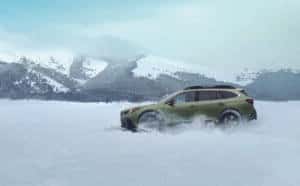
If there is one thing that Subaru is best known for, it’s its fleet of vehicles’ ability to adeptly handle rough, difficult and unpredictable terrain. It should come as no surprise then that every Subaru model except for the Subaru BRZ all come equipped with onboard all-wheel drive.

While the onboard AWD systems do vary between models, the Subaru brand AWD is unique in that it offers extremely flexible control on the road. Rather than the standard AWD that fluctuates between front axle and rear axle, Subaru’s AWD allows for powered steering wheel to wheel, moving traction emphasis from left to right.

Additionally, the AWD available in Subaru vehicles is permanent rather than selectively powered on and off, offering a smooth, tactile ride experience on any surface. Subarus don’t wait for the road conditions to worsen and traction beneath the wheels to be lost–instead, continuous power is applied to all four wheels for reliability and consistency on changing road surfaces.
• Does all wheel drive hurt fuel economy?
 

Unfortunately, vehicles with AWD/4WD typically trade fuel economy for better stability and traction on the road. This is due primarily to the extra weight and mechanical resistance that AWD equipment adds to the frame of the car. Heavier vehicles naturally require more energy to accelerate and decelerate, and that affects the overall MPG you can expect from your vehicle. Vehicles with AWD tend to be larger-bodied cars in general, too, like SUVs and trucks, which also contributes to the average fuel economy. 


It’s not all bad, though. The security and control that AWD systems provide drivers more than makes up for the marginal extra costs at the gas pump. Snow, ice, and slick, rain-wet roadways are no longer as hazardous with powered steering. Additionally, many hybrid and fully-electric vehicles are available with AWD, making fuel economy concerns a thing of the past.


There are also ways to offset the lowered fuel efficiency from utilizing AWD systems. Subaru’s continuously variable transmission (CVT) accounts for and reduces interruptions caused by shifting gears, and this ultimately maximizes the engine’s performance and can balance out the vehicle’s fuel economy overall. Driver-oriented changes to raise the MPG cap you can expect from any given car also include limiting the use of onboard air-conditioning and heater systems, as well as making sure to smoothly accelerate and maintain optimal vehicle speed. 
•Subaru’s are getting bigger in terms of size and cargo room, does that hurt fuel economy?
 
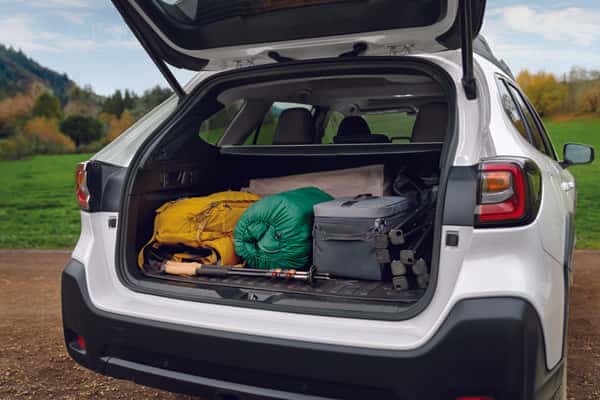
Fuel economy is always important, especially when it comes to larger, all-terrain vehicles. Because of the aerodynamic design of the Subaru fleet, the extra cargo space available is not going to add any drag on your fuel efficiency, at least while the vehicle is empty. Thankfully, an extra 100 lbs of camping gear in the trunk will only reduce your fuel economy by 1% on average, allowing you to pack in everything you need without worrying about the cost at the pump.Loading up a roof rack is really the only time hauling gear might cause a dip in your MPG. With a kayak or a set of bicycles adorning the rooftop, you can expect a 2-8% decrease in fuel economy in the city and a 10-25% decrease at highway speeds.

In order to better balance out the fuel efficiency lost when lugging you adventuring supplies, we do have a few tips. Keeping a clean vehicle and carrying only the items you need for your trip will keep the vehicle light and therefore use less gas. It’s important to also remove your roof rack when it’s not in use, as just having it up on the car can reduce your fuel economy by 2% in some circumstances.

Fortunately for Subaru owners, the one takeaway should be that while sometimes your MPG might be impacted by heavy exterior cargo, in general the vehicle itself is so well attuned to the road that you’ll hardly feel a cost difference when fueling up.
•What is a Subaru boxer engine and how is it different than the engine in a mortal car?
 
When it comes to vehicle design, Subaru is always pushing for cutting edge engineering. The signature “Boxer” engine is so called because of the unique layout of the pistons, symmetrically arranged around the crankshaft so that when moving they resemble the jabs of a boxer in the ring. This arrangement allows the moving pistons to create an equality of force across the engine and cancel out individual vibrations to limit engine tremors. And a tremor-free engine is a good thing! It offers stable, less erratic movement when driving, giving the driver the ultimate control on the road.But that isn’t all: the compact, optimized size of the Boxer engine also takes up less space in the engine compartment and is mounted in the lower center of the vehicle. This not only provides the frame with grounding and a lower center of gravity, but it additionally makes the vehicle less likely to roll over in the event of an accident.

In the case of a head-on collision, there is always the chance that the hood could crumple and push the engine into the passenger cabin, causing injury to the driver. The Boxer engine, on the other hand, is placed in such a way that in the event that the front end crumples in an impact, the low-set engine will crumple beneath the passenger cabin, avoiding passengers and potential injury entirely. With such a specialized engine design, you as the driver are guaranteed both a smooth ride and also the highest standard in added safety benefits.
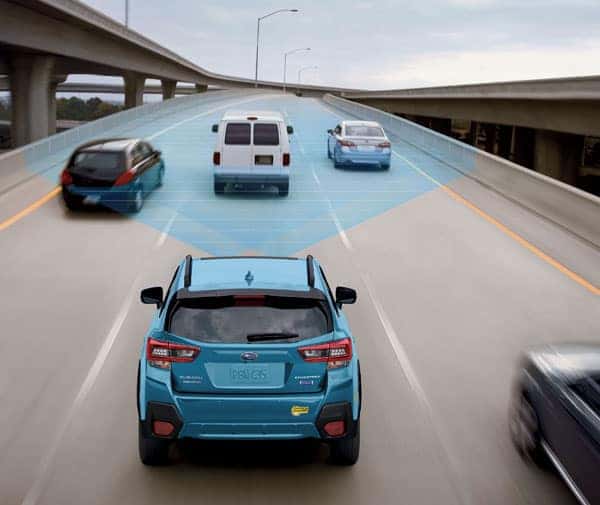
•What is Subaru’s EyeSight system?
 
With over 1 million vehicles sold with EyeSight enhancement, it’s little wonder that the safety system is so sought after. Subaru ingenuity went into the development of the EyeSight system, designed to constantly monitor traffic movement around you and react quickly to changes and hazards on the road before an accident can happen.Utilizing a set of dual color cameras discreetly hidden on the vehicle exterior, the EyeSight system is perpetually scanning the road as you drive. Its adaptive cruise control system ensures that you keep a safe distance from the car in front of you to reduce the likelihood of a front collision. If you stray too close to another vehicle, the system will quickly reorient and automatically adjust your speed. Lane keep assist ensures that there is proper space between you and cars driving parallel on the highway by alerting you in real time of any drifting or swaying in the lane. And just to add a cherry on top to all of these excellent safety features, the pre-collision braking feature will kick in, apply full-force braking, and throttle back the speed of your vehicle in the event of a front collision to better mitigate damage.

Best of all, these safety enhancements really do make a difference on the road. All Subarus equipped with EyeSight received the highest possible safety rating from IIHS for front crash prevention. You can’t go wrong with tried and tested results!
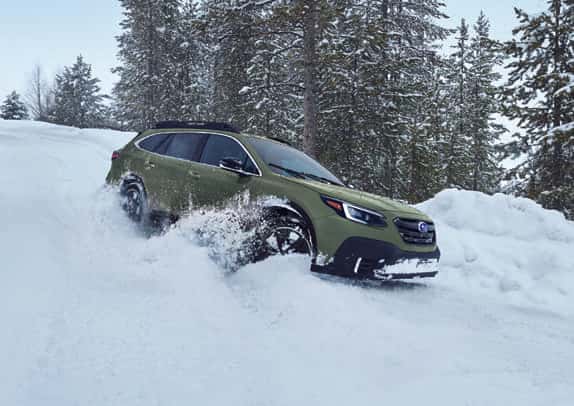
•What is Subaru’s X-Mode system?
 
Subaru is probably best known for its trailblazing AWD, but there is a whole host of onboard technology on newer models that enhance your ability to drive through challenging conditions. One of these recent implementations is the X-Mode system, designed to make even the rockiest, thorniest, or snowiest driving conditions smooth and easy to handle.X-Mode comes standard on all Outback models, and is an available upgrade for the Forester. Working in tandem with the state-of-the-art AWD, the X-Mode system helps to improve traction by providing extra powered steering. Looking to drive up or down particular vertiginous terrain? The X-Mode system has got your back, ensuring that you can easily traverse in altitude without risk to your traction.

But how does it work? Utilizing lower gear ratios, the X-Mode system is able to generate extra power at the wheels for enhanced stability. And you won’t have to worry about transmission lock-up either, as X-Mode deactivates the clutch to keep all power on the wheels where you want them. Additionally, sensitivity to loss in traction increases, allowing the vehicle to respond quickly to changes in grip on the treads and prevent spinning out.
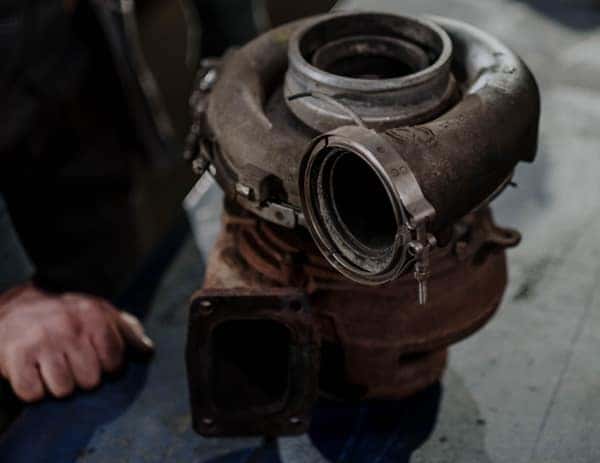
•What is a turbocharger?
 
Simply put, a turbocharger is a forced induction system designed to improve engine performance and fuel efficiency. It can also upscale smaller engines to perform with just as much power as an engine much larger than it might.To explain what exactly a turbocharger looks like, picture two snail-shaped halves that are joined by a central shaft. Each half contains a turbine. One side draws in hot exhaust gasses to spin its interior turbine, while the other side sucks in air through its turbine and compresses it within the engine. The increased air pressure within the engine allows for more internal combustion to take place, effectively upping the power output of the engine.

Unlike a supercharger, a turbocharger does not draw on engine power to drive its processes. The hot, expanding gasses already present in the engine fuel the spinning of the turbocharger’s turbines, essentially making it self-replenishing.

And the boost to engine performance is quite impressive. Turbochargers can ameliorate engine performance to provide anywhere between 30-50% more power than they otherwise might. Smaller engines with a turbocharger are better for fuel economy because of their reduced size and weight, but that doesn’t mean they don’t pack just as much of a punch as larger, weightier engines.
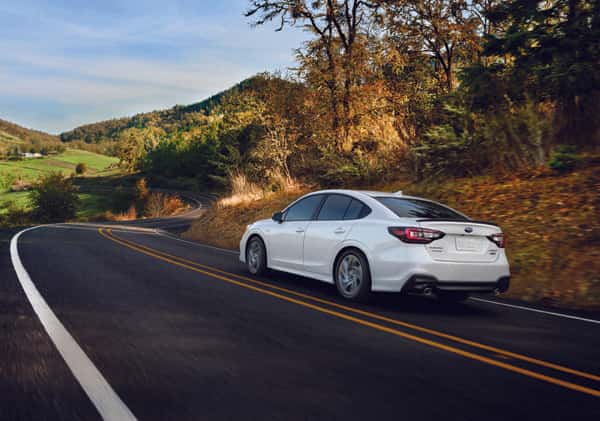
•What is a Continuously Variable Transmission?
 
If you’ve been shopping for newer vehicles, you might have noticed that a lot of recent models have dropped the traditional automatic transmission for a continuously-variable automatic transmission. In the past, most cars were made with 2, 3, or 4-speed gears, but now, thanks to advancements in manufacturing technology, we have started to see 8,9, and 10-speed gear drivetrains become the standard.But what is a continuously-variable transmission, and is it worth the hype? In short, yes, absolutely. Auto manufacturers worldwide have increasingly started to implement continuously-variable transmissions–or CVTs for short–in their model lineup. The reason for this is that the design of a CVT is much better for overall fuel economy. Utilizing a conveyor belt design–where the “continuous” part of a CVT gets its name–rather than a “step”-based design, a CVT is able to transition smoothly between different gears, diminishing the lag time between gears that you might see in earlier automatic transmission designs. Additionally, the more gears you have in an engine, the better able it is to modulate and optimize speed transitions in a variety of driving conditions. Where lower gears typically prioritize acceleration performance, the higher gears are there to optimize fuel economy at greater speeds.

So if you’re looking for a smoother driving experience overall and want to spend a little less at the pump, a vehicle with a CVT is definitely something you should prioritize.
•What is Vehicle Dynamics Control?
 
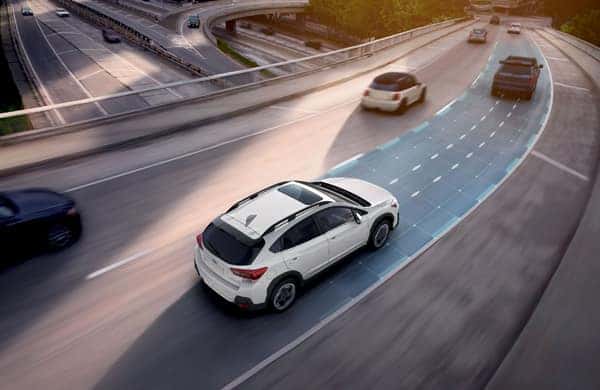
There is a reason that Subaru is so well-renowned for its onboard safety technology.Vehicle Dynamics Control, or VDC, is just one of many enhancements that are designed to keep you safe on the road in any driving conditions.Essentially, VDC is an electronic system of checks and balances that can easily recalibrate vehicle settings if one of its many sensors detects errant driving or traction loss. These sensors actively monitor steering wheel position, speed changes through the wheels, yaw rate, and lateral acceleration speeds. If the system determines there is a problem, it steps in to correct before an accident can happen. Depending on the situation, this could be adjusting torque-split from front to rear, applying the brakes to individual wheels to regain traction, altering the timing of the engine, or reducing the fuel flow into the engine.

But these safety features won’t affect your overall driving experience. Subaru engineers have carefully crafted the onboard system to interfere as little as possible when unnecessary to make sure the driver retains autonomy. Other driving assistance systems might over-correct when the conditions are clear, but the Subaru VDC system is lightweight and only offers assistance where necessary, ensuring your driving is smooth, responsive, and most of all, enjoyable.
•What are anti-lock brakes?
 
Anti-lock brakes have been a government standard on all new cars since 2011, but you might be unfamiliar with what exactly anti-lock braking systems do for you. Like many systems designed for road safety, anti-lock brakes operate using wheel sensors that can detect locking in an emergency scenario and correct by automatically pulsing the brakes to allow the driver to steer out of harm’s way. In this way, anti-lock brakes–or ABS–allow the driver to retain control in critical moments and prevent errant vehicle skidding.

When you as the driver feel the ABS initiating with a rumble, make sure to keep your foot firmly planted on the brake pedal. Colloquial wisdom has told us to pump the brakes in loss of control situations, but the ABS is there to perform this maneuver for you–and with much higher efficiency.

In order to ensure that your ABS is working as intended, manufacturers recommend that you keep brake fluid full, maintain ideal tire pressure, and check brake linings frequently so that they are clean and clear of debris. With a well-maintained vehicle, you can rest easy knowing that your ABS will take care of you in the event of brake control loss.
•What is Subaru Brake Assist?
 
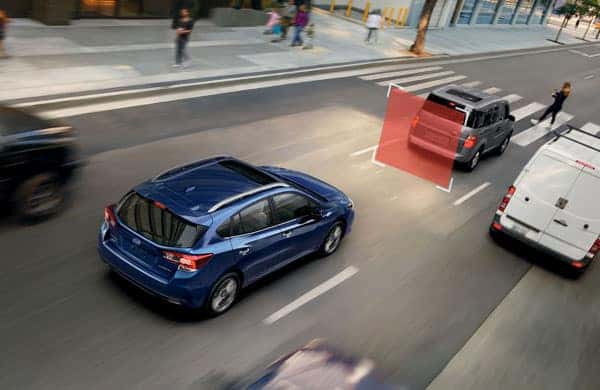
Like much of Subaru’s onboard technology, Brake Assist is designed to keep you safe. In the event of a vehicle slowing unexpectedly in front of you, Brake Assist kicks in to apply hydraulic pressure in the braking system to immediately halt your car and prevent an accident.

As a driver, it’s only possible to depress the brake pedal so much, especially in a high tension event, so the Brake Assist is there to sense frantic maneuvering and correct the situation by applying full braking power. Pre-collision Brake Assist further enhances the standard Brake Assist on all Subaru models, ensuring your ride is always as safe as possible.

The Brake Assist system’s ability to recognize potential frontal impact before it even occurs is one of the best ways to prevent avoidable accidents.
•What is the Subaru Brake Override System?
 
Subaru vehicles are equipped with the most modern onboard technology designed to keep the driver and passengers safe on the road. The computing system in the car is always monitoring acceleration, deceleration, wheel traction, and other statistics in order to cross-check with itself to ensure that it is able to act first in the event of an emergency.

Subaru’s Brake Override System has been standard on every Subaru model made after 2013, it is designed to reduce the chance of unintended acceleration if the driver presses both the brake pedal and the gas pedal simultaneously. If this happens and the driver does not remove their feet from either pedal, the engine power is immediately cut in order to favor braking and deceleration of the vehicle.

This accidental straddling of both pedals may sound unorthodox, but it’s easy to do. Operating the vehicle with work boots or heavy winter boots can lead to both pedals being depressed simultaneously. But don’t worry! The computer sensors are sensitive enough to determine whether or not the driver pressing the pedals is in real need of emergency braking, or if the pedals were simply depressed by accident.


Saved Vehicles

You don't have any saved vehicles!

Look for this Save icon

Once you've saved some vehicles, you can view them here at any time.

Menu

Get Directions

3025 Auburn Way N, Auburn, WA, 98002
Rairdon's Subaru of Auburn 47.334988949058115, -122.22335680867624.